


10 Jobsite Efficiency Hacks Every Contractor Should Know
Every contractor understands that time equals money. Are you making the most of your jobsite work? Learning practical contractor tips can help you save time and increase work efficiency. These ten important methods help you manage your schedule better and use construction technology, making your work more efficient and improving how your team works together. Want to improve your process and face problems directly with methods for better workflow? Here are some important tips that could improve your contracting experience.
The Importance of Efficiency in Contracting
Contractors lose an average of $30,000 per project due to inefficiencies, highlighting the need for effective strategies.
For instance, a construction firm experienced delays because of poor communication, leading to a 25% increase in labor costs.
To address this, using project management software such as Procore can make it easier to assign tasks, track progress, and manage site logistics.
Establishing standardized operating procedures also pays off; a study found that teams adhering to clear guidelines reduced project overruns by 20%.
Regular feedback meetings can help spot slowdowns, allowing teams to make quick changes and stay on schedule, which can increase profits in the contracting business.
Overview of the 10 Hacks
This article shares ten practical tips to improve jobsite productivity and simplify contractor tasks.
These tips include:
- Using digital project management tools like Trello for task tracking
- Using time-tracking software like Harvest to avoid working too long on tasks
- Having regular team check-ins to improve communication
Adopting cloud storage solutions, such as Google Drive, promotes accessibility of important documents on the go.
Every plan improves the workflow and keeps the team coordinated, ensuring everyone is accountable for their tasks. This cuts down on mistakes that could cause expensive delays. Integrating these techniques can create a more cohesive and productive work environment.
Hack 1: Optimize Your Work Schedule
A clear work schedule can lower labor expenses by 15-20%, greatly improving the efficiency of the entire project and ensuring project deadlines are met.

Using Time Blocks Effectively
Implementing time blocking can lead to a 25% increase in productivity, allowing teams to focus on high-priority tasks and improve project planning.
To effectively implement time blocking, start by identifying your major tasks for the week. Use tools like Google Calendar or Trello to create a visual layout of your days.
Allocate specific time slots, such as dedicating Monday mornings to project planning and Wednesday afternoons to team meetings. Aim for 90-minute blocks for focused work, allowing for a 15-minute break afterward to recharge.
Regularly review and adjust your time blocks to suit your needs, ensuring your schedule remains practical and adaptable.
Prioritizing Tasks
Using the Eisenhower Matrix can help with task prioritization, ensuring critical jobs are completed first.
The Eisenhower Matrix divides tasks into four categories: urgent and important, important but not urgent, urgent but not important, and neither urgent nor important.
For example, on a job site, urgent and important tasks may include addressing safety violations, while routine inspections could fall into important but not urgent.
A simple template contractors can use includes a two-by-two grid labeled accordingly. Everyone in the team needs to update their tasks daily. These tasks are discussed in morning meetings to keep attention on the most important work, which helps improve both work efficiency and safety.
Hack 2: Leverage Technology
Technology can improve worksite productivity by up to 40%, which is very important for contractors today.
Project Management Software
Using project management software like Asana or Buildertrend can save teams 15 hours a week in planning and communication, enhancing digital documentation processes.
Asana offers intuitive task assignment and progress tracking, ideal for fast-paced teams focused on deadlines. In contrast, Buildertrend excels in construction project management, incorporating features like scheduling and budgeting for contractors.
Implementing Asana involves creating a project board, assigning tasks, and setting deadlines, facilitating transparency and team accountability. Conversely, Buildertrend requires inputting project milestones and budgets, enabling real-time updates for stakeholders.
By choosing the appropriate tool for your project, you can improve how your team works and finish the project much faster.
Mobile Apps for Communication
Mobile apps for contractors like Slack and WhatsApp help people talk to each other instantly, reducing confusion and improving teamwork.
To maximize their effectiveness on job sites, establish clear usage guidelines for these apps.
For instance, create specific channels in Slack for different teams-like construction, management, and logistics-allowing focused discussions.
Use WhatsApp for quick updates or urgent messages with team members on-site. Encourage regular check-ins; for instance, a daily morning message can set the day’s priorities.
Think about using digital tools like Trello or Asana. These can link to Slack to monitor progress, making sure everyone is aware of task status.
Hack 3: Streamline Communication
Good communication at work sites can reduce delays by 30%, ensuring that all team members are on the same page.

Daily Stand-Up Meetings
Holding daily stand-up meetings can make teams more responsible and clear, leading to a 20% improvement in finishing tasks and better teamwork.
To structure effective stand-up meetings, allocate 15 minutes each day. Begin with each team member addressing three key questions:
- What did I accomplish yesterday?
- What will I work on today?
- Are there any obstacles in my way?
Encourage team members to stay brief and focused, using a timer if necessary. Let a different person run the meeting every week to include everyone. This lets people see the meeting from different viewpoints. Using virtual tools like Trello or Miro can help visualize tasks, ensuring all members are informed and accountable.
Using Visual Boards
Using visual boards like Kanban helps monitor tasks, ensuring workflows are organized and tasks are completed effectively, encouraging better processes.
To set up a visual board, begin by choosing a platform. For digital options, Trello offers an intuitive interface where you can create boards for different projects, add tasks as cards, and move them through columns like ‘To Do,’ ‘In Progress,’ and ‘Completed.’
For a physical setup, use a whiteboard with sticky notes for a tactile approach. Both methods make it easier to organize by clearly showing tasks. This helps teams decide what to do first and work together better.
Allocate 30 minutes to create your board and customize it according to your team’s workflow.
Hack 4: Invest in Quality Tools
Buying good tools and equipment can cut project delays from equipment breakdowns by 25%, saving time and money.
Choosing the Right Equipment
Selecting the right equipment for specific tasks can minimize downtime and maximize productivity on the job site.
- Evaluate the job at hand to choose appropriate tools. For example, when framing, a pneumatic nailer speeds up the process and improves accuracy compared to manual tools.
- For heavy lifting, a hydraulic jack is a cost-effective choice for smaller budgets, while a telehandler offers versatility on larger sites. Think about using tools like a laser level to make sure everything is perfectly straight during installations.
- Pick tools that fit the size of your project, the level of accuracy you need, and your budget to improve work speed without spending too much.
Maintenance and Care for Longevity
Regular equipment maintenance can extend the life of tools by 50% and prevent costly repairs, ensuring your investment pays off.
To maintain tools effectively, follow a quarterly schedule. Start with a thorough cleaning using a soft cloth and mild detergent, especially for power tools to prevent rust.
Inspect blades and bits for wear; replace them if dull. Lubricate moving parts with appropriate oil, ensuring smooth operation. Store tools in a dry, clean area, ideally in a tool chest or pegboard to keep them organized.
For larger equipment, consider a maintenance log using an app like Trello or Notion to track jobsite inspections and service dates.
Hack 5: Implement Lean Construction Principles
Using lean construction methods can cut waste by as much as 30%, improving resource management on the work site.
Identifying Waste
Finding and sorting waste can show problems in how things are done that waste time and money.
To effectively identify waste, focus on these categories: overproduction, waiting, transportation, extra processing, inventory, motion, and defects.
For instance, to measure overproduction, analyze production rates against customer demand, using tools like Lean Six Sigma that emphasize data collection and analysis.
To handle delays, evaluate the time taken for each step and set up methods that make processes more efficient, like using Kanban boards to keep track of progress.
Regularly check these measurements to make action plans that improve how things are done, saving both time and resources.
Continuous Improvement Practices
Creating a habit of ongoing improvement can lead to efficiency increases of 20% or higher, encouraging a positive work atmosphere.
To create a strong ongoing improvement process, begin by planning regular team meetings where brainstorming and sharing ideas are encouraged.
Use tools like Miro for online teamwork and working together from different locations so everyone can participate. Following the workshops, implement feedback loops by using platforms such as Trello or Asana to track suggestions and their outcomes.
Successful companies like Toyota have thrived using these methods, showcasing how consistent reviews, efficiency benchmarks, and adjustments reinforce a learning culture. This method increases team participation and eliminates inefficiencies in a structured way.
Hack 6: Train Your Workforce with Contractor Training
Training employees well can increase their productivity by 24%. They will learn the skills and communication abilities needed to solve problems at work.
Onboarding New Employees
Implementing a structured onboarding process can significantly reduce ramp-up time for new employees by 30%, enhancing site supervision.
To achieve this, make sure your onboarding includes a mentorship program where experienced employees help new hires.
Schedule regular employee training sessions covering essential skills and company values, using resources like learning management systems (LMS) such as LinkedIn Learning or Coursera.
Provide new hires with a detailed employee handbook, inclusive of key policies and procedures, for quick reference.
By arranging these elements well, new employees will feel more welcomed and fit into the workplace culture more quickly.
Ongoing Skills Development
Running regular workshops and trade skills development helps team members learn new skills, which can improve their performance on the job.
To support this goal, consider implementing regular training sessions, such as:
- Project Management Certification Improves planning, execution abilities, and stakeholder engagement, resulting in better project results.
- Safety Workshops Regular safety training and safety protocols help prevent accidents at work and encourage employees to care for each other.
- Technical Skill Development Providing training for software and technology integration helps teams stay current with industry tools, leading to better productivity.
These initiatives result in a more knowledgeable workforce, reduced errors, and heightened project success rates.
Hack 7: Organize the Jobsite with Site Organization
A tidy and orderly worksite can reduce safety problems by 40% and make the work process smoother.
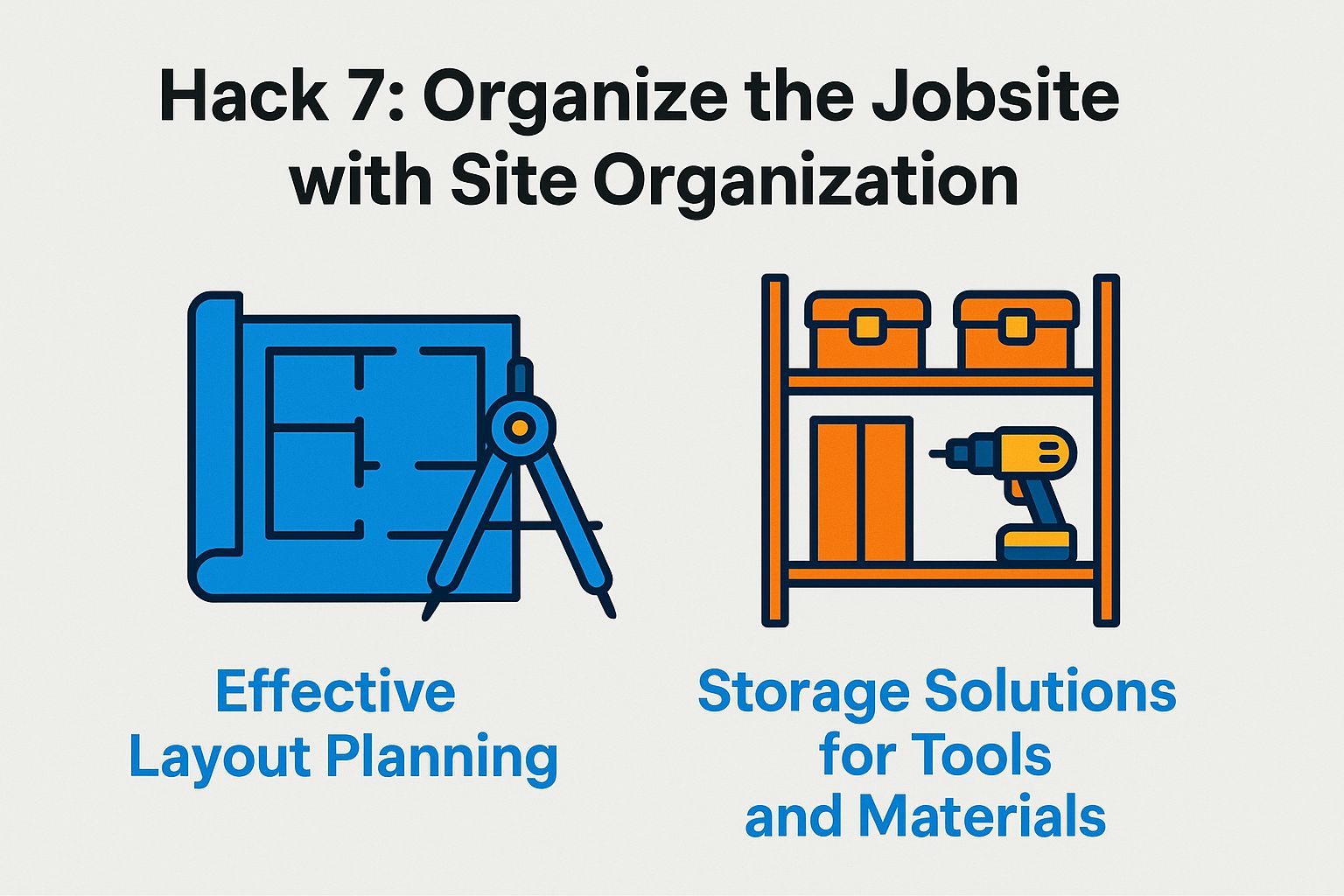
Effective Layout Planning
Effective layout planning can reduce material handling time by up to 50%, streamlining operations and minimizing delays.
To create an efficient jobsite layout, start by assessing your workflow analysis and identifying key areas such as material storage, workstations, and access routes. Tools like AutoCAD can help visualize different design options.
Successful designs often feature distinct zones: one for equipment, another for materials, and a separate area for final assembly. For example, using color-coded areas can make it easier to find tools or materials quickly.
Set up a system to track materials, such as RFID tags, to make sure resources are available when needed, enhancing material procurement.
Storage Solutions for Tools and Materials
Implementing proper storage solutions can save 10 hours a week in searching for tools and materials, enhancing productivity.
To make better use of space on the job site, focus on storing items vertically. Use wall-mounted racks for tools to clear up space on the floor.
Organize tool chests with clear labels to improve material handling and make it easier to find tools-label drawers with names like ‘Hand Tools’ or ‘Fasteners.’
Mobile storage carts can facilitate easy movement of frequently used items across the site.
For materials, consider storage bins with lids to keep items organized and dust-free.
Regularly reassess your systems and adjust as needed to maintain efficiency, which can drastically improve your workflow.
Hack 8: Monitor Progress and Adjust for Performance Metrics
Regularly checking progress increases the chances of projects finishing successfully by over 90%, allowing timely adjustments.

Using KPIs to Measure Efficiency
Using KPIs like labor productivity, material costs, and performance reviews can help understand how well a worksite is running and guide needed changes.
To track these KPIs effectively, consider implementing specific calculations.
For labor productivity, use the formula: “(Actual Output / Hours Worked) x 100” to gauge efficiency.
For material costs, calculate “(Total Material Costs / Total Project Costs) x 100” to see budgeting impact.
Regularly analyze these metrics over time; for example, comparing month-over-month labor productivity can highlight trends, enabling proactive adjustments before inefficiencies escalate.
Programs such as Microsoft Excel or Google Sheets can simplify data gathering, project tracking, and display, which makes it easier to analyze.
Adapting Plans Based on Feedback
Changing plans according to team feedback and stakeholder feedback can raise project success rates by 30%, improving the ability to handle challenges.
To create an effective feedback loop, start by implementing regular check-ins using tools like Trello or Asana for task management.
Schedule bi-weekly feedback sessions, where team members can voice their thoughts on current projects.
Use Google Forms to collect honest feedback without names after each project stage, ensuring quality control.
Go over this feedback during team meetings and write down tasks to keep track of them.
This method improves communication and supports continuous progress, leading to better project outcomes.
Hack 9: Create a Positive Work Atmosphere
Creating a positive work environment can increase team morale by 40%, resulting in higher productivity and a lower turnover rate.
Encouraging Team Collaboration and Construction Automation
Working together through team-building exercises can improve communication and trust, resulting in a 30% rise in productivity.
To encourage working together, think about setting up workshops where people can talk openly and share ideas.
Activities like escape rooms or trust falls can break down social barriers.
Use teamwork tools to connect with contractors, such as:
- Slack for real-time communication,
- Trello for project management, and
- Zoom for virtual meetings.
Encourage teams to set weekly goals and share progress through these platforms. By including organized activities that promote teamwork alongside useful tools, your team can build better connections, leading to improved project results and increased employee happiness.
Recognizing and Rewarding Efforts for Customer Satisfaction
Recognition programs can increase jobsite morale by 15%, encouraging teams to surpass project goals and achieve construction best practices.
To implement effective recognition strategies, consider monthly awards for outstanding performance, such as a ‘Team Member of the Month’ spotlight.
Pair this with tangible rewards like gift cards or an extra day off. Regular shout-outs during team meetings can reinforce positive behaviors.
Use tools like Bonusly for peer-to-peer recognition, allowing team members to acknowledge each other’s contributions in a fun, engaging way. These practices increase motivation and create a team-friendly environment, leading to project success.
Hack 10: Evaluate and Reflect with Construction Trends
Reviewing past projects can increase the success of upcoming work by 20%.
Post-Project Reviews
Carefully reviewing projects after they finish helps teams find what worked well and what needs to be better. This helps in planning better strategies for upcoming projects.
To perform a thorough review, begin by asking important questions like:
- What were the project’s primary goals and time management milestones?
- Were these goals met?
- What obstacles arose, and how were they addressed?
Use tools like Trello or Asana to record information and keep track of tasks. Create a shared document where team members can contribute their feedback and suggestions, ensuring a collaborative atmosphere.
Set up another meeting to discuss the results and determine practical actions for upcoming projects, promoting continuous improvement.
Implementing Lessons Learned
Implementing lessons learned can improve project planning efficiency by 25%, ensuring mistakes aren’t repeated.
To use what you have learned in upcoming projects and implement change orders effectively, start by keeping key details together in one place. Tools like Confluence or Notion can facilitate this process.
Encourage team members to contribute regularly and review previous projects before initiating new ones. Set up frequent meetings to review progress and change plans, ensuring everyone understands the current situation.
For example, after a project finishes, hold a meeting to discuss the successes and mistakes. This helps the team learn and do better in upcoming projects.
Recap of the 10 Hacks for Building Information Modeling
The ten tips help make the workplace run smoothly. They offer suggestions for better planning and creating a good work atmosphere.
These tips are essential for increasing productivity.
For instance, implementing a digital time-tracking tool like Toggl and time-saving strategies can help employees manage their time effectively, reducing wasted hours. Another example is holding weekly team meetings to promote open communication and quickly solve any problems.
Using Trello or Asana to create a shared online dashboard simplifies project management, improves procurement plans, and keeps everyone updated.
Using these methods, teams can greatly improve their efficiency, site cleanliness, and create a more productive work environment.
Encouragement for Continuous Improvement
Consistently improving practices on the job site leads to better outcomes, highlighting the need for contractors to change and grow.
To achieve continuous improvement, contractors should focus on regular contractor resources training and feedback. Holding weekly safety meetings helps find possible dangers and improves following rules.
For example, using tools like SafetyCulture allows teams to report and manage risks effectively in real-time, improving jobsite safety and enhancing risk management practices. Using Lean construction methods can make tasks more efficient by incorporating productivity tips and waste reduction strategies. For example, the Last Planner System reduces waste by ensuring work is done only when all materials and resources are available, improving supply chain management and supporting sustainable practices.
Looking at project data often can point out where things can be improved, promoting responsibility and high standards through crew management and productivity analysis.
About the Author
My name is Daniel Hart, and I’m a University of Michigan graduate with a bachelor’s degree in Construction Engineering. I’ve owned a modular construction company in Ohio for the past 13 years and specialize in helping healthcare organizations and contractors find affordable, efficient office space with used and custom modular solutions. As a writer and editor for Office Trailer Sales, I share the insights that help businesses expand faster and smarter.